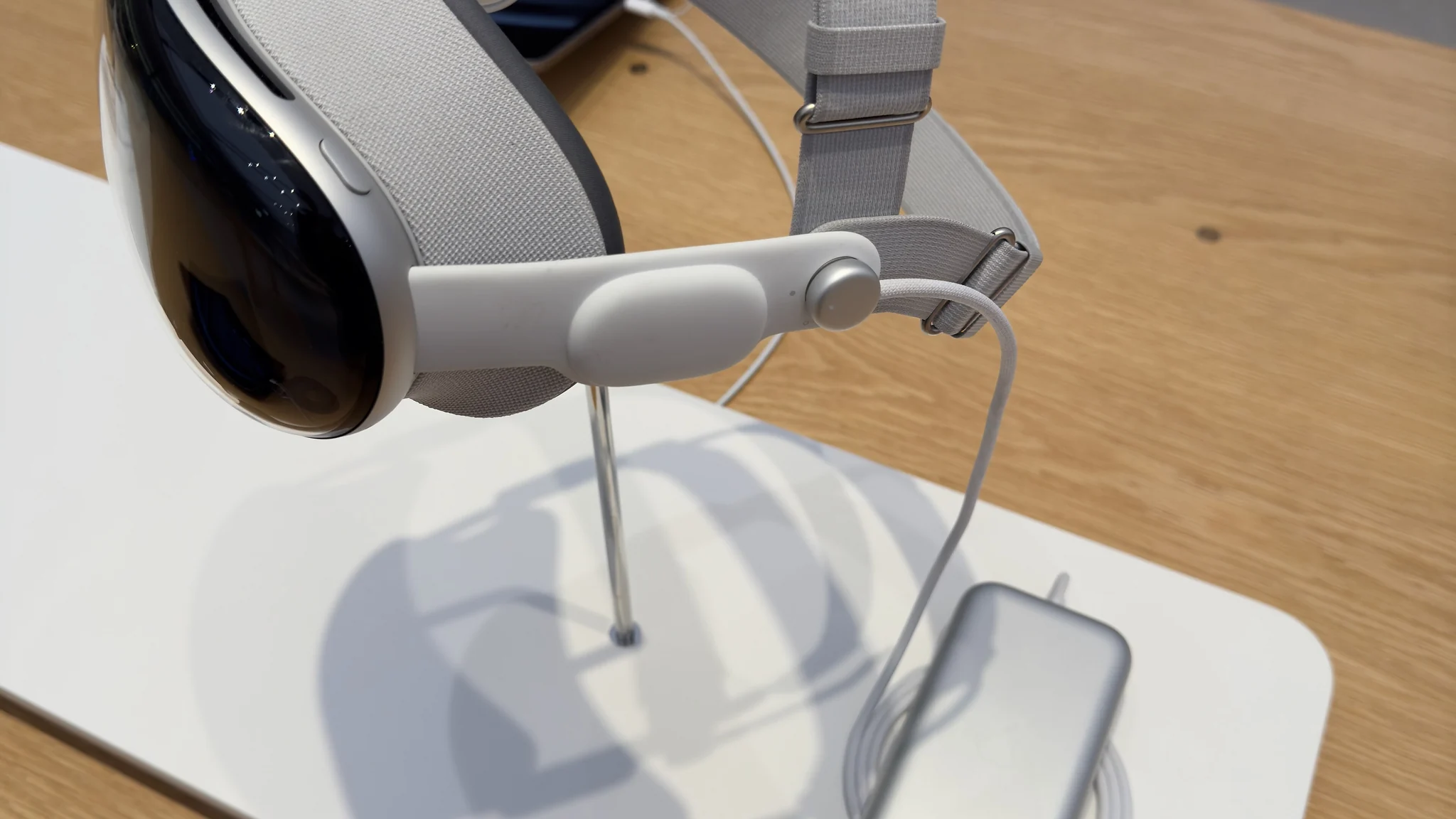
Apple is cutting more than 200 jobs across the teams that build Vision Pro and Siri, Bloomberg's Mark Gurman reported on Thursday. Around 100 of the roles come from the Vision Pro group, and roughly 100 more from Siri and software engineering. In a statement, the company said the changes were made to evolve the business, and that affected employees can apply for other roles internally.
The cuts would be unremarkable at almost any other large company. At Apple, which spent two decades building a reputation for not doing layoffs, they read differently. And the specific teams involved say more about the product roadmap than any statement could.
The cuts map onto what glasses cannot do
Inside the Vision Pro group, the gaming team is being largely shut down, and the team producing immersive video is being scaled back. Those are the two experiences that genuinely need a headset. Roomscale games and wraparound video don't work on a phone. They won't work on glasses either.
Per the report, Apple has told employees that the Vision Pro and visionOS aren't going away. But the near-term device is smart glasses, and glasses would support neither immersive video nor advanced gaming. The arithmetic writes itself. If the next product can't run the software, the software teams go first.
Immersive video priced itself out of its audience
Immersive video has been a flagship Vision Pro feature since launch. It's also expensive to make. Engadget's account of the report puts the decision plainly: production costs aren't justified by the number of people who own the hardware. The headset costs $3,699, has been widely described as cumbersome, and its audience never materialised at the scale the content assumed.
Apple will keep producing a smaller number of immersive videos in-house and wants third parties to carry the format instead. That's the bet every platform makes when it stops wanting to pay for prestige content: someone else will do it for the exposure. Sometimes they even do.
Old Siri is the expensive part of new Siri
The Siri cuts follow the same logic in different vocabulary. Siri AI, which shipped with iOS 27, runs on a revamped technical architecture, and the expertise needed to maintain the old assistant isn't the expertise needed to build the new one. Apple's Intelligent Systems Experience team, which coordinates AI features across the company's apps and services, is also affected.
One personnel detail sharpens the picture: the executive who ran Vision Pro development left for OpenAI recently. The two efforts most associated with Apple's last hardware push are now maintained by smaller teams, or from a different building entirely.
What to watch: the 2028 window and who fills it
Employees were told a new Vision Pro model is still being considered for as early as the end of 2028, and that this round follows an earlier one that took roughly 60 people from the Vision Pro team. Two years is a long time for a flagship product line to coast on existing content. The question worth asking isn't whether a new headset ships. It's whether anyone outside Apple is still making software for the platform by then, given the company just cut the teams whose job was to seed it.
The smart glasses, whenever they arrive, inherit a cleaner brief: no gaming, no immersive video, presumably no $3,699 price tag. Whether that makes them a smaller product or a more honest one, nobody outside Cupertino can say yet.